Bladder Control Supplements: How to Read Claims and Labels
Learn how to compare bladder-control supplements by outcome, dose transparency, finished-product evidence, interactions and refund terms.
Bladder-support supplements are often marketed around urgency, frequency, leaks, pelvic-floor support, urinary microbiome balance or recurrent UTI prevention. Those are different outcomes, so one ingredient study should not be stretched across all of them.
A five-question label test
- What outcome is promised? “Supports bladder health” is not the same as treating incontinence.
- Are active amounts disclosed? Proprietary blends limit dose comparison.
- Is the evidence on the finished product? Ingredient studies are useful context, not product proof.
- Could ingredients interact with medicines or conditions? Multi-herb formulas need extra scrutiny.
- Is there a clear refund policy? A guarantee does not prove efficacy, but clear terms reduce purchase ambiguity.
Common formula families
Pumpkin seed + soy
Seen in products such as AZO Bladder Control and URO Bladder Control.
Cranberry / urinary-support blends
Cranberry has evidence for recurrent UTI prevention in certain populations, not as a universal leak treatment. Cochrane
Probiotic formulas
Microbiome effects are strain-, dose- and population-specific.
Multi-herb formulas
Can broaden the mechanism story but make interactions and dose interpretation more complex.
Where FemiPro fits
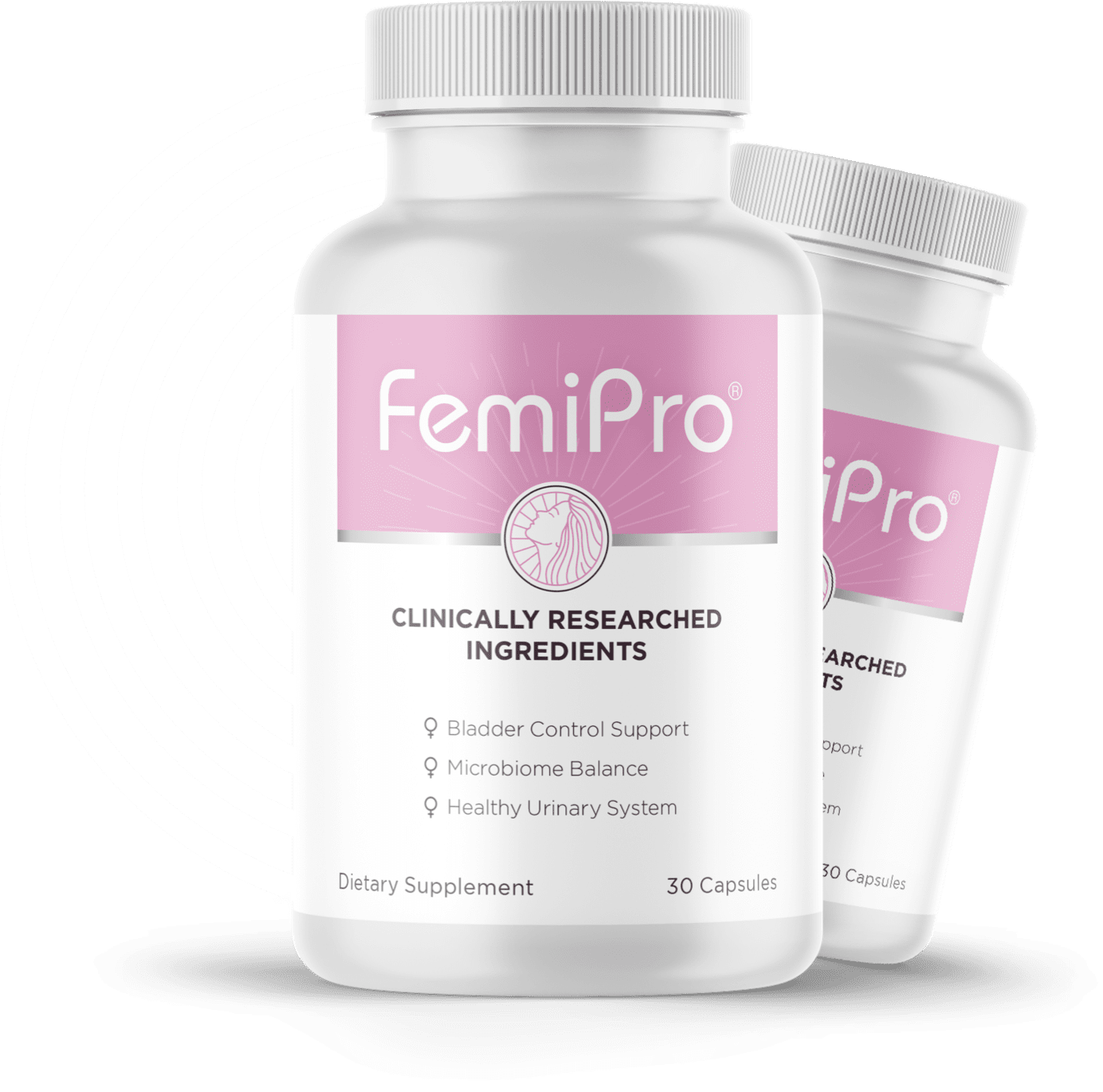
FemiPro combines the cranberry/urinary-support and probiotic formula families, with added bearberry, berberine and mimosa pudica.
Analyze FemiPro ingredients